 Question 1:
I’m trying to re-certify, but my previous exam score is showing. Can I override this? If you have a previous certificate that has not yet expired, your best prior passing score will always be listed. You can still re-certify by clicking on the course, clicking on the step entitled "Certification Exam", and clicking on the button that reads "Retake Vignette". Question 2: Do I really need the manual when competing the CANS with Clients & Families? Yes! The manual describes each item, and some item descriptions may not be aligned with your intuition, so it may be helpful to allow the manual to guide your ratings to ensure consistency. You may not need to review every item on the CANS in the manual with Clients and Families but if you are unsure how to rate some items and collaboratively rating those items with Clients and Families, they should have the same information you have to inform their ratings. Question 3: I get confused when youth are in foster care. Which caregivers do I rate when they are not living with their biological parent(s)? The manual instructs us to rate Foster Parents if they are the ones fulfilling the permanency plan, and often we rate those who the youth identifies as their caregivers/family. Luckily, you can individually indicate ratings in the caregiver domain for up to 4 caregivers when multiple people are supporting the youth. Question 4: I was certified as a CANS trainer through Praed [completed the training for trainers (T4T) + homework and received a trainer certificate], but recently I completed my annual CANS recertification and did NOT achieve a score of .80 or higher. Can I still train? In order to maintain trainer status, you must earn a reliability score of 0.80 or higher on your local TCOM tool annually and this cannot lapse for more than 3 months. The good news is that you can retest if you don't achieve that score the first time! Once you achieve the required reliability score of .80 or above, you can connect with TCOM Support & Assistance ([email protected]) to ensure your trainer information is up to date. Question 5: Do I have to have 2s or 3s on my CANS? 2s and 3s on the CANS indicate that there is a need for action in order for the rating to change (and for Needs items, this usually means there is an associated functional impairment related to that item). If there are no areas that need action (no functional impairments), then we should ask ourselves if the client needs our level of services and/or if they may need to be referred to a lower level of care. Any client with a mental health diagnosis must have some sort of functional impairment to meet criteria for that diagnosis so there should at least be one 2 for an item that aligns with their mental health diagnosis.
0 Comments
 If you take just 5 minutes to watch our new CANS booster video, it will help you reflect on your collaborative style and give you (and your team) ideas about why the CANS is a collaborative tool. You don't have to (and shouldn't be) doing CANS all alone-it's a team tool, so make sure everyone is doing their share, including your clients, their families, your colleagues, and other stakeholders. You can watch the video in just 5 minutes and find an easy corresponding activity and handouts you can use with a friend, supervisor, or in your team if you'd like. Don't miss out on this quick and easy CANS skill booster! Check it out now?
 Did you know that there are engagement resources and guides on the Alameda TCOM website? Come check them out! Engagement Guides: The Child and Adolescent Needs and Strengths (CANS) assessment tool is intended to be used collaboratively with youth, families, and teams. Effective collaboration relies on clear communication, trust, and a commitment to building consensus among team members. Review these guides and tip sheets to see if there are any gems that you can bring back and use in your practice to increase engagement and elevate youth and family voices in care.
For example, we have:
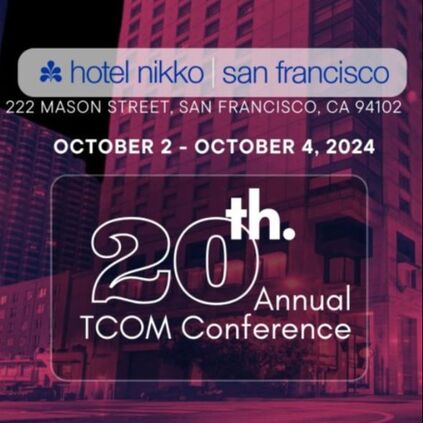 The 20th Annual TCOM Conference will take place on October 2-4, 2024, at the Hotel Nikko in San Francisco, California. “This year's conference aims to continue the tradition of collaboration and innovation in climbing the hills of system change.”
Questions? Contact: [email protected] Updates? See: TCOM Conversations Blog*, LinkedIn Page, and Center’s Website *Providers can join the blog’s mailing list to receive information about all events, including the TCOM Conference.  We are thrilled to introduce you to our newest Alameda TCOM Collaborative Member: Crystal Moore, MS, LMFT! Crystal is the Assistant Director of Training and Associate Director of the California Family Urgent Response System for Alameda County at Westcoast Children's Clinic. Crystal also provides supervision at The Psychotherapy Institute in Berkeley, and has previously held the roles of a therapist & clinical supervisor at Westcoast Children’s Clinic; worked at Casa de la Vida in a residential treatment program for Transition Age Youth; volunteered at a suicide prevention hotline; and was a board member for Healthy Black Families. Throughout her career, Crystal pays particular attention to the needs of the most marginalized and vulnerable and believes the CANS gives us a common language to better understand, rate and respond to the needs of the people we serve.
 What does it mean to determine action levels for "the person, not the person in care"? Question 1: I'm confused about how to determine action level ratings for my 11 year old child client on their annual CANS. They just returned from spending the summer at a therapeutic outdoor camp for kids with special needs. It was a perfect setting for them and they seem to be doing so well! Do I select action levels based on how they are now or how they were doing the last time I saw them before the summer break? Answer 1: This is a great example of services for a client potentially masking their needs. The following video from the Praed Foundation provides an excellent explanation of the principle of determining action levels for a person separate from the care that they have been receiving: It's About the Person, Not the Person in Care | TCOM Heuristics - YouTube Two Caregivers?! A simple solution for determining action levels for caregivers with different needs  Question 2: What happens if I need to select an action level for two Caregivers in the CANS and they're both in different places? Answer 2: Action level ratings for multiple caregivers should reflect the level of action that is needed within the entire caregiver system. That means that if one caregiver has no mental health needs, but another caregiver has actionable mental health needs (let's say a '2'), you will indicate the highest level of need among them and mark a '2' for Caregiver Mental Health. This demonstrates that there is action needed to support the mental health of at least one caregiver in the family system. 5 Reasons to take a Live Zoom Certification Class Question 3: What are the pros and cons of taking the Live Certification course versus taking the online Alameda 0-24 course?  Answer 3: There are some perks to taking an online-only certification course, such as being able to self-pace or customizing the focus areas for your learning needs. But before you jump into those 67 steps, here are 5 reasons we think a Live Certification course is superior:
 Our trainers are skilled at troubleshooting most access issues that trouble new users in Alameda County. If you are having any difficulty accessing or navigating the tcomtraining.com website, join the next live training or an Office Hours session for some live technical assistance.
 Did you know that the CANS is NOT a questionnaire? It is just a clever framework to organize the often complex stories of our clients' lives, using a simple shared language tool so families and team members are all on the same page and working together. Check out our quick CANS Tips to Engage Youth, Young Adults, and Families including key questions to ask that align with the CANS domains and can start the conversation with the families about the CANS. The CANS is about building relationships and trust, so be collaborative and transparent with clients and the CANS can help you make sure their voice is front and center!
 Have you explored the Alameda TCOM Collaborative website? We have been updating it regularly to make it more useful for you! You can access resources by the following categories:
Here is an example of a tool for understanding the full trajectory of CANS use: 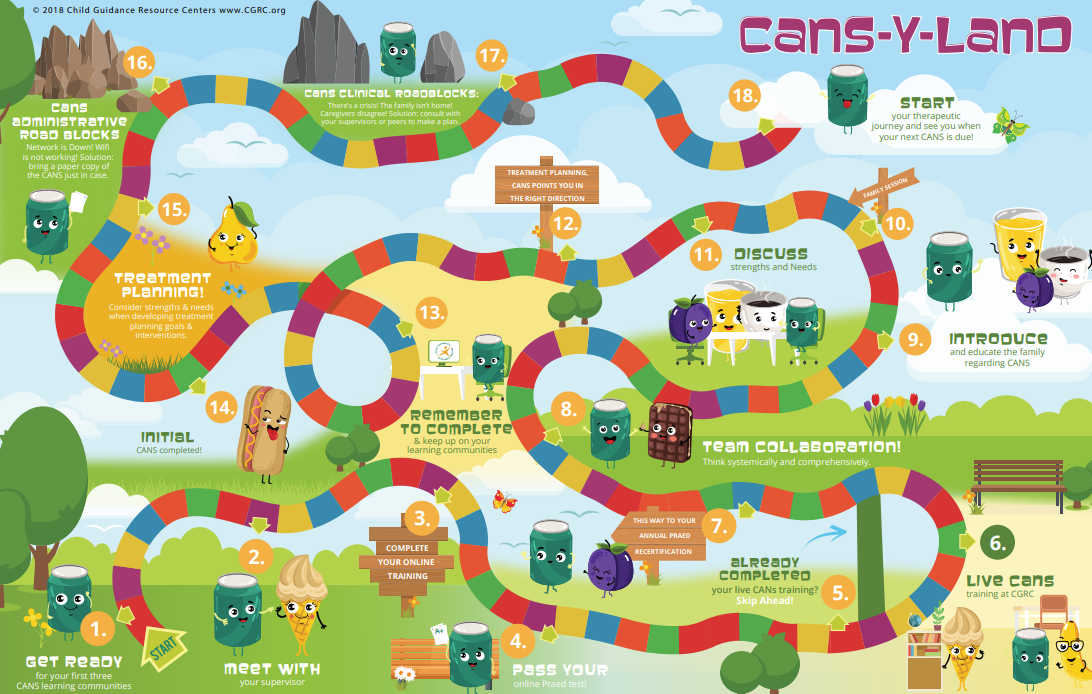 You can also contact us via the site with questions or feedback!
 In a world where success is defined by innovation, adaptability, and resilience, the power to truly support your clients lies within your grasp. Today, we bring you an exciting newsflash that will inspire and empower you to reach new heights: TCOM tools, the key to being a great therapist!
Imagine a toolbox filled with cutting-edge resources and strategies designed to propel you and your clients towards their goals. CANS and ANSA offer a framework that will revolutionize how you approach clients, enabling you and your clients to work collaboratively towards goals in effective ways you never imagined. Let's take a closer look at some of the incredible features TCOM tools have to offer: 1️⃣ Client-Centered: TCOM tools equip you with an innovative framework to keep the client's voice front and center and help you to help your clients build on their strengths and reduce their needs. 2️⃣ Communication Excellence: Unlock the power of effective communication. TCOM tools provide you with the framework for your care team members to articulate ideas, and build strong connections that will propel your clients forward in their lives. 3️⃣ Optimal Performance: Maximize your productivity and performance with TCOM tools. From goal-setting strategies to collaborative techniques, you'll be more effective in your work and improve the health and well-being of clients in less time. 4️⃣ Growth Mindset: Embrace a growth mindset that fuels continuous learning and personal development. TCOM tools guide you in building a growth mindset with your clients, helping them take steps towards success, and moving them towards their true potential. 💫 With the CANS or ANSA, the possibilities are limitless. Empower your clients to break through barriers, exceed expectations, and embark on a journey of personal transformation. 🌟 Remember, you have the power within you to achieve anything you set your mind to. Seize this opportunity, embrace the tools, and become the architect of your destiny! 🌈 Potential awaits—unlock it with the CANS or ANSA today! 🚀  We have scheduled our next FREE Virtual CANS/ANSA Training of Trainers! This 2-day training will take place on Tuesday, May 23rd and Wednesday, May 24th from 9am-4pm. Continuing Education hours will be available for eligible attendees.
This training workshop is designed for individuals who wish to provide training as well as coaching on the CANS/ANSA to staff within their own organizations or communities. Key concepts and skills will be practiced through small group discussions, exercises, and activities. Standard curriculum and other materials used during the workshop will be provided to support their work in helping trainees become certified in the use of the CANS/ANSA. Certified Trainers are required to re-certify annually to maintain their trainer status. Certified Trainer re-certification requires initial and annual CANS/ANSA certification with a score of .80 or above. Join our growing team of Alameda County CANS and ANSA Trainers advancing county-wide transformation. This training will be posted on our training calendar soon but in the meantime, feel free to reach out to our Alameda County Behavioral Health CANS Lead, Jessica Vigil, if you are interested in becoming a Certified CANS/ANSA Trainer. |
AuthorBlog content is created by Alameda TCOM Collaborative members. Send feedback through the Contact page. Archives
June 2024
Categories |
 RSS Feed
